Heating in Encino: More Important Than You Might Think
Many Encino residents give their heating system almost no thought until the first cold snap of the year. After months of running the air conditioner, it's easy to forget that the furnace or heat pump even exists — until you turn on the heat and nothing happens, or something smells wrong, or the system runs for an hour and the house is still 60°F.
While Southern California winters don't produce the deep freezes common in other parts of the country, Encino nights from November through February regularly drop into the 40s and low 50s, and the interior San Fernando Valley can see overnight lows near freezing during cold snaps. A reliable heating system isn't a luxury here — it's a genuine necessity, especially for households with young children, elderly residents, or anyone with respiratory or circulatory conditions.
This guide walks through the most important warning signs that your heating system needs attention, what professional heating repair involves, and how to decide whether repair or replacement makes more financial sense.
Warning Sign #1: The System Short-Cycles or Shuts Off Unexpectedly
Short cycling means your furnace or heat pump turns on, runs for only a few minutes, and then shuts off before the house reaches the thermostat's setpoint — only to start again a short time later. This cycle repeats continuously without ever achieving consistent warmth.
Common causes include a clogged air filter triggering the furnace's high-limit switch, a failing flame sensor that can't confirm the burner is lit, an oversized system that heats so quickly it satisfies the thermostat before fully circulating warm air, or a heat pump reversing valve that is stuck between modes.
Short cycling is hard on every component in the system because the most stressful moment in any mechanical system is startup. A system that starts and stops dozens of times per day accumulates wear much faster than one that runs in normal longer cycles. Don't ignore this symptom — it accelerates the path toward complete failure.
Warning Sign #2: Unusual Odors During Operation
A brief dusty smell when you first turn on the furnace at the start of heating season is normal — it's simply dust burning off the heat exchanger and ductwork after months of disuse. That smell should dissipate within an hour or two of operation.
Odors that warrant immediate attention include:
- A persistent burning smell that doesn't go away after the first run of the season — this can indicate a failing electrical component, an overheating motor, or debris caught in the heat exchanger.
- A sulfur or rotten egg smell — natural gas is odorized with mercaptan specifically so you can detect a leak. If you smell this, shut off the system immediately, evacuate the home, and call your gas utility before calling for HVAC service.
- A musty or moldy smell — this often indicates mold growth on the evaporator coil or in the ductwork, which our indoor air quality solutions can address alongside duct cleaning.
Warning Sign #3: Uneven Heating Across Rooms
If some rooms in your home are comfortably warm while others feel cold despite running the heat, the problem could be in the heating equipment itself, the ductwork, or both. Leaky or disconnected ducts dump conditioned air into attic and wall spaces before it ever reaches the living area. Our duct repair and sealing service is specifically designed to address this type of uneven comfort problem.
However, if the ductwork checks out, uneven heating can also indicate a failing blower motor that isn't circulating air adequately, or a heat pump that's losing capacity as it ages and can no longer maintain setpoint temperatures on colder nights.
Warning Sign #4: Rising Heating Bills Without a Change in Usage
A gradual increase in your gas or electric bill during heating months — without any significant change in how often you run the heat — is a sign that your system is working harder than it used to in order to achieve the same result. This loss of efficiency is expected as equipment ages and components wear, but a sudden spike in costs points to a specific failure that's driving excess energy consumption.
Before assuming the equipment is failing, verify that your air filter is clean, that all supply and return vents are open and unobstructed, and that your thermostat settings haven't changed. If everything looks normal and the bills are still climbing, a diagnostic visit from our team will identify what's changed inside the system.
Warning Sign #5: The System Is Over 15 Years Old
The average service life of a gas furnace is 15–20 years. Heat pumps typically last 10–15 years in Southern California, where they operate year-round in a dual cooling-and-heating role. As systems approach and exceed these age ranges, repair frequency increases, efficiency declines, and the risk of a major component failure — like a cracked heat exchanger — rises significantly.
A cracked heat exchanger is a serious safety issue. It allows combustion gases, including carbon monoxide, to mix with the air being circulated through your home. Because carbon monoxide is colorless and odorless, the only way to detect it is with a working CO detector or a professional inspection. Our technicians use combustion analysis equipment to test for this during every heating inspection — it's not something to skip on an aging furnace.
Repair or Replace? How to Make the Right Call
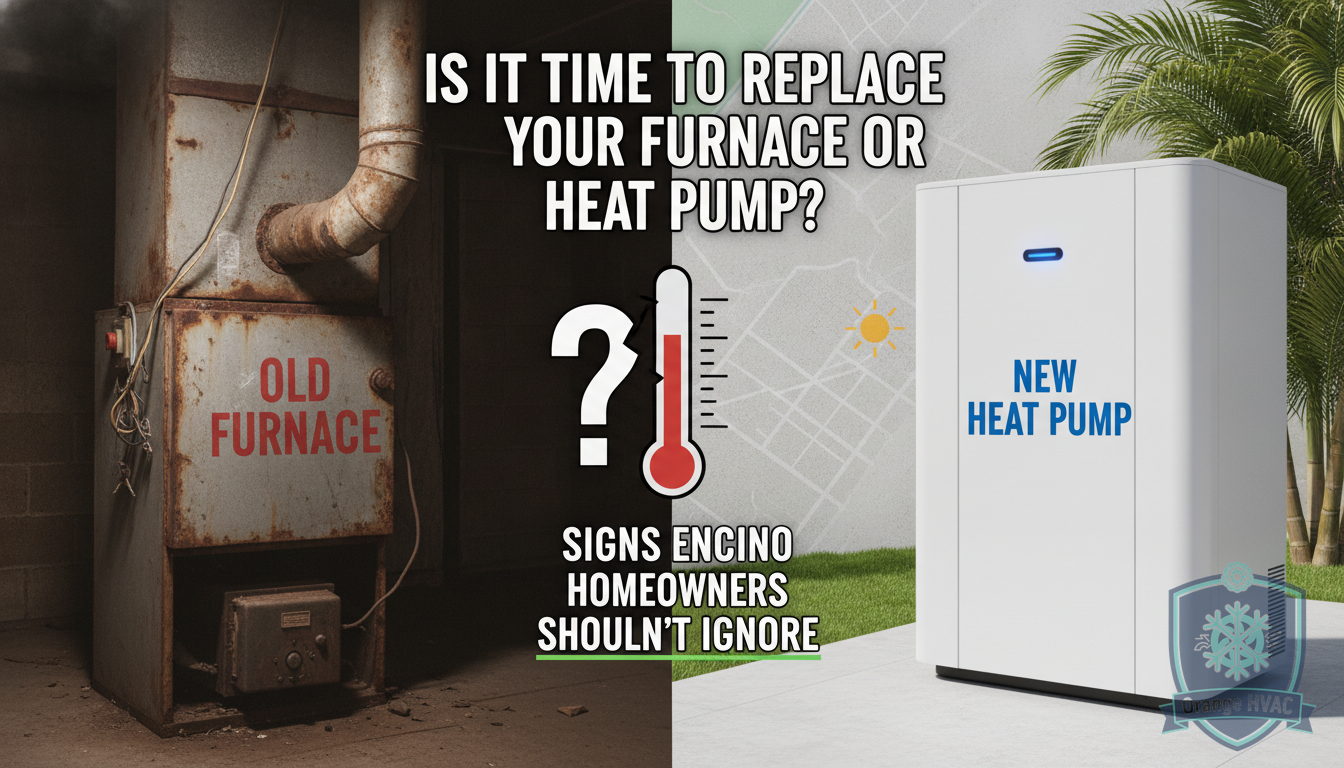
When a heating system fails, the core question is always whether it makes more sense to repair the current equipment or invest in a new system. A few guidelines that help frame this decision:
- If the system is under 10 years old and the repair cost is modest (less than $500–$600), repair is almost always the right answer.
- If the system is 12–15 years old and needs a major repair — a heat exchanger, compressor, or control board — get a replacement quote alongside the repair estimate. The payback on a new, high-efficiency system may be faster than you'd expect, especially given California's energy costs.
- If the system is over 15 years old and has needed multiple repairs in recent years, replacement is typically the smarter long-term investment. A new system comes with a manufacturer's warranty and significantly better efficiency than equipment from that era.
Our technicians provide honest assessments and will never pressure you toward replacement when repair is the right choice. We document all findings in writing and provide upfront pricing before any work begins.
What to Expect from a New Heating System Installation
If replacement is the right direction, the process starts with choosing the right equipment type and size. For most Encino homes, the options are a gas furnace paired with the existing AC system, or a high-efficiency heat pump that handles both heating and cooling in a single system.
Heat pumps have become increasingly popular in California due to their significantly higher efficiency compared to gas heating — they move heat rather than generating it, making them two to three times more efficient than even a high-efficiency furnace in moderate climates like ours. California also offers substantial rebates through programs like BayREN and utility company incentive programs that can significantly offset the upfront cost.
Regardless of which direction you choose, proper sizing through a Manual J load calculation is essential. An oversized system will short-cycle and leave your home feeling drafty and humid; an undersized system will run constantly without ever reaching setpoint. Our installation team always performs this calculation before recommending any equipment.
Serving Encino and Nearby Communities
Orange HVAC — Encino handles heating repair and replacement for homeowners throughout Encino and the surrounding area, including Tarzana, Reseda, Van Nuys, and
Call +18189365449 or fill out our online form for a free, no-obligation quote.Confirm Availability